PAN Africa is launching a national project to identify and prioritize Highly Hazardous Pesticides (HHPs) responsible for poisonings and deaths in Senegal.
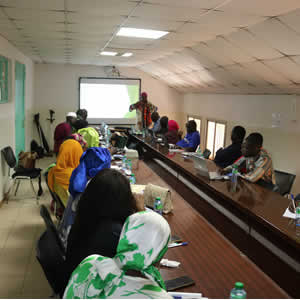
On Wednesday, April 1, 2026, the Senegal Poison Control Center (CAP), based at Fann Hospital in Dakar, hosted the official launch workshop for the project entitled: "Identifying and prioritizing highly hazardous pesticides (HHPs) responsible for poisonings and deaths in Senegal to enable better national and regional monitoring, effective prevention, and improved decision-making."
Led by the NGO PAN Africa, the project is funded by the Centre for Pesticide Suicide Prevention (CPSP), based in Edinburgh, in collaboration with the University of Edinburgh in the United Kingdom.
Highly hazardous pesticides (HHPs) represent a serious and well-documented problem in Senegal. According to the 2025 activity report of the Poison Control Center, pesticides account for approximately 20% of recorded poisoning cases, and 8.4% of intentional poisonings are linked to these substances. Globally, the World Health Organization (WHO) estimates that 700,000 people die by suicide each year, of whom 15 to 20% do so through the voluntary ingestion of pesticides.
In her opening address, the Coordinator of NGO PAN Africa, Ms. Maïmouna Diène WANE, emphasized that the voluntary ingestion of pesticides is the 2nd leading cause of intentional poisoning in Dakar, and is frequently underestimated due to sociocultural taboos. She noted that young adults are the most affected, according to the 2024 ANSD report and STEP surveys.
The workshop was officially opened by Prof. Mamadou FALL, Director of the Poison Control Center, who reaffirmed the CAP's commitment to providing the technical expertise and clinical data necessary for the project's success.
Several institutions were represented:
- Senegal Poison Control Center (CAP) — technical partner
- World Health Organization (WHO) — institutional partner
- Directorate of Plant Protection (DPV) — Ministry of Agriculture
- Directorate of Environmental Regulation and Control (DIREC)
- National Commission for the Management of Chemical Products (CNGPC)
- SODEFITEX — cotton sector
- Environmental Gendarmerie
- Croplife Senegal
- Civil society and consumer associations (FOSCOSEN)
- National media (television, radio, online and print press)
The WHO representative, Ms. Mady BA, recalled that countries such as Sri Lanka have reduced pesticide-related suicides by 28 to 92% through targeted bans on HHPs. She called for strengthening the regulatory framework, supporting farmers, training health workers in poisoning case management, and integrating prevention into mental health policies.
Ms. Béatrice GRENIER, representative of the CPSP, pointed out that certain HHPs already banned in numerous countries worldwide remain widely accessible in Africa. She presented the CPSP's three priorities within this project:
- Supporting Senegal in the progressive elimination of HHPs, in line with international frameworks and the goal of the Global Framework on Chemicals (GFC), which aims for their elimination by 2035.
- Making Senegal a model and source of inspiration for other West African countries.
- Ensuring that the data produced feeds into national, regional, and international processes, particularly the Rotterdam and Stockholm Conventions.
The workshop also presented the T-MAPP tool, developed by PAN-UK — a mobile application featuring a standardized questionnaire that enables data collection on poisoning cases directly in the field. Already deployed in 13 countries, the tool has generated 11,300 poisoning reports with an estimated rate of 32%. The data collected has facilitated regulatory decision-making in several countries.
At the close of proceedings, participants put forward the following recommendations:
- Strengthen collaboration among all partners for data collection and sharing
- Reinforce national regulations on highly hazardous pesticides
- Inform and mobilize the CNGPC, particularly its toxicovigilance and pesticides sub-committees
- Deploy the T-MAPP tool for community-level data collection
- Establish a national and regional communication strategy on HHPs
- Involve the Mental Health Division in the monitoring of intentional poisonings
- Advocate for making pesticide standards legally binding
- Sustain public awareness efforts on pesticides and poisoning risks
- Share the CAP's toxicovigilance reporting form with all relevant stakeholders
In closing, PAN Africa Coordinator Ms. Maïmouna Diène WANE thanked all participants for the quality of the discussions. She announced the creation of an inter-partner WhatsApp group to facilitate the monitoring of activities among all stakeholders.
PAN Africa reaffirms its commitment to making Senegal a model for all of West Africa in the fight against highly hazardous pesticides, in the service of public health and environmental protection.